


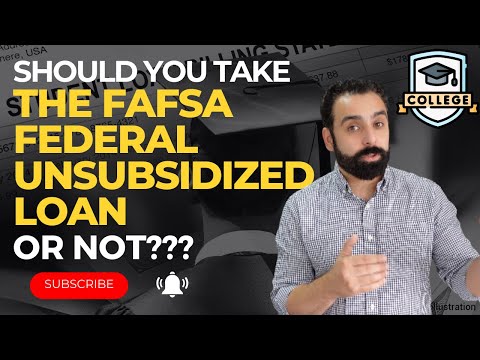
Federal Unsubsidized Student Loans
Description: Students who receive federal student loans (federal PLUS) do not have to pay for them. If you borrow enough money, then you may never have to repay the loan. However, if you don’t make enough money after graduation to repay these loans, then you will have to pay back the remainder of the debt plus interest over many years. Repayment starts six months after graduating college.
Federal student loans were created after World War II. Before they existed, if students dropped out of school, their family would have had to pay off their remaining tuition balance. In 1941, the government began offering subsidized Stafford student loan debt. This program was expanded in 1965. However, it wasn’t until 1990 that the federal student loan program became fully functional.
Today, the majority of people who graduate college owe student loan debt. According to data collected by the New York Fed, total outstanding student debt reached $12.8 trillion dollars in 2016. That’s close to 18% of US GDP. Total student debt per household has surpassed $100,000.
The average undergraduate graduates with over $37,000 in debt. Graduate students carry even greater debt — approximately $50,000 upon graduation.
How Does Federal Unsubsidized Loan Work?
Under the current system, the federal government pays interest on the student loan while the borrower is enrolled in school. The government doesn’t pay anything once the borrower graduates.
This means that borrowers who take out a private loan may pay less in interest than those who work with the federal loan option. Private lenders offer financial assistance in exchange for taking on the risk of loaning money to a student.
Students should always compare different types of student loans before selecting the right program for them. Here are some things to consider when choosing between a private and federal loan:
Interest rates vary based on the type of loan and credit history.
Private loans often charge higher interest rates and require a bigger down payment than federal loans.
Private loans tend to offer lower monthly payments and flexible repayment terms.
Repayment plans don’t exist for federal loans, so they may not be suitable for everyone.
Where Can I Find Information About Student Loans?
You can access basic information about federal student aid programs, including the Free Application for Federal Student Aid (FAFSA), the William D. Ford Direct Loan Program, the Federal Family Education Loan Program(FFELP), and the Perkins Loan Program. You can use the FAFSA to apply for grants and scholarships. For more detailed information, visit the National Consumer Law Center (NCLC) page at www.nclcinfo.org/students.
Federal Unsubsidized Student Loans
What does federal subsidized mean?
A student loan is any type of loan given out by a lender (e.g., banks, credit unions) to pay for college expenses. Federal subsidies refer to loans that have been paid back to the government at some point before they were fully repaid by borrowers. In other words, federal subsidies are loans that were originally granted by someone else and then later forgiven (given away) by the U.S. Government. These loans may be forgiven if borrowers repay them over 10 years, 15 years, 20 years, etc.
Why do people use federal subsidized student loans?
There are many reasons people use federal subsidized student loan programs. First, federal student loan programs provide flexible repayment terms – borrowers don’t need to make monthly payments until their full debt is paid off. Second, borrowing money to cover education costs is cheaper than paying for tuition outright. Third, federal funds often go directly to students rather than being siphoned off by middlemen who pocket the difference between what schools charge and what students actually end up paying.
How much money could I borrow?
The maximum amount of federal subsidized dollars a borrower can receive is $31,000 for the 2019-2020 school year. Borrowers who choose to take out private student loans can borrow up to $49,500 per academic year. However, not all lenders offer these same types of loans, and even if a lender offers such a program, interest rates can still vary widely depending on the borrower’s credit score and other factors.
Federal Unsubsidized Student Loans
Federal Unsubsidized student loans are created under IV of the Higher Education Act (HEA). Such loans are not subject to interest and repayment cannot begin until after graduation. However, the borrower may be charged fees for collection; and if default occurs, the federal government may eventually become end to have its money back.
Subsidized student loans are issued under I of HEA (the Pell Grant program) and are repaid at 6% interest over 10 years. However, the borrower’s repayment period begins only upon completion of college and does not extend beyond 30 years after graduation. In addition, subsidized student loans may be discharged under certain circumstances.
Direct Stafford Loans are issued under II of HEA. These loans are granted based on financial need, with no limit on the amount borrowed. Repayment begins immediately and lasts 20 years (unless extended), although borrowers may defer payments for up to five years before beginning repayment. Interest accrues at a fixed rate of 5%. Unlike subsidized student loans, direct Stafford loans may not be discharged in bankruptcy.
Parent PLUS Loans are issued under III of HEA. Parents co-borrow with their children and may borrow up to the cost of attendance (COA) minus any other aid received. COA is determined by taking the total annual costs of attendance (tuition, room and board, books, supplies, etc.) divided by the number of semesters attended. Loan proceeds are disbursed directly to the borrower’s school account. While parents must repay their PLUS Loans at a fixed rate of 8%, they do not accrue interest. If the parent chooses to make monthly payments, they may pay less than the 8% interest rate.
Private Alternative Loans are issued under IV of HEA and are guaranteed by banks and lenders. A borrower must provide proof that he/she meets income requirements. Because these loans are private alternative loans, interest rates vary widely. Unlike unsubsidized student loans, private alternative loans are dischargeable in bankruptcy.
Other types of loans are also available, including federal work-study programs, Perkins Loans, and William D. Ford Direct Loans. Each type of loan requires a separate application and approval process.
►HEY, we’ve got more valuable information here: ►CLICK HERE LOANS FOR STUDENTS◄
►Cloud of related items ▼
bloque1x

Related Links ▼
- Studentaid.gov/understand-aid/types/loans
- Salliemae.com/student-loans/
- Discover.com/student-loans/
- Nerdwallet.com/best/loans/student-loans/private-student-loans
- Money.usnews.com/loans/personal-loans/personal-loans-for-students
- Credible.com/blog/student-loans/personal-loans-for-students/
- Govloans.gov/categories/education-loans/
- Forbes.com/advisor/student-loans/best-private-student-loans/
- Navyfederal.org/loans-cards/student-loans.html
- Wellsfargo.com/goals-going-to-college/loan-options/
- Whitehouse.gov/briefing-room/statements-releases/2022/08/24/fact-sheet-president-biden-announces-student-loan-relief-for-borrowers-who-need-it-most/
- Ed.gov/category/keyword/federal-student-loans
- Myfedloan.org/
- Navient.com/
- Usa.gov/student-loans
 English
 Afrikaans
 Albanian
 Amharic
 Arabic
 Armenian
 Azerbaijani
 Basque
 Belarusian
 Bengali
 Bosnian
 Bulgarian
 Catalan
 Cebuano
 Chichewa
 Chinese (Simplified)
 Chinese (Traditional)
 Corsican
 Croatian
 Czech
Czech Danish
 Dutch
Dutch Esperanto
 Estonian
 Filipino
 Finnish
 French
 Frisian
 Galician
 Georgian
 German
 Greek
Greek Gujarati
 Haitian Creole
 Hausa
Hausa Hawaiian
 Hebrew
 Hindi
Hindi Hmong
Hmong Hungarian
 Icelandic
 Igbo
Igbo Indonesian
 Irish
Irish Italian
 Japanese
 Javanese
 Kannada
 Kazakh
 Khmer
Khmer Korean
 Kurdish (Kurmanji)
 Kyrgyz
 Lao
Lao Latin
Latin Latvian
 Lithuanian
 Luxembourgish
 Macedonian
 Malagasy
 Malay
Malay Malayalam
 Maltese
 Maori
Maori Marathi
 Mongolian
 Myanmar (Burmese)
 Nepali
 Norwegian
 Pashto
 Persian
 Polish
 Portuguese
 Punjabi
 Romanian
 Russian
 Samoan
 Scottish Gaelic
 Serbian
 Sesotho
 Shona
Shona Sindhi
 Sinhala
 Slovak
 Slovenian
 Somali
 Spanish
 Sudanese
 Swahili
 Swedish
 Tajik
Tajik Tamil
Tamil Telugu
 Thai
Thai Turkish
 Ukrainian
 Urdu
Urdu Uzbek
Uzbek Vietnamese
 Welsh
Welsh Xhosa
Xhosa Yiddish
 Yoruba
 Zulu
Zulu