


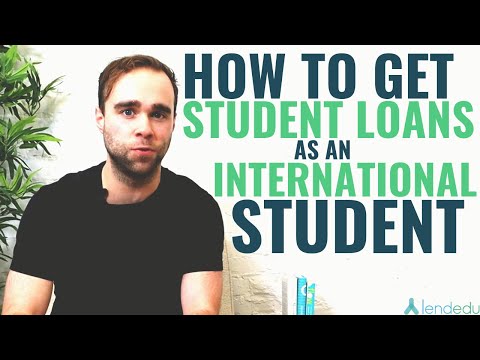
Student loans can be a daunting prospect especially when you’re starting out as a college student. However, if you do not have much money saved for college, then a student loan may be the best route for you. There are many different types of loans out there that you may need to consider including private and federal student loans. You will want to make sure that you understand how these loans work before taking them out.
Private Loan:
A Private loan is also known as Direct Subsidized or Unsubsidized Federal Loan. These loans require no credit check and no cosigner. If you meet certain income requirements, you may qualify for a lower interest rate than what the government offers. The only disadvantage to this type of loan is that you won’t get any aid until after you graduate.
Federal Student Loan:
If you choose to go with a federal loan, then you will first want to make sure that the school you plan to attend accepts it. Most schools will accept the FAFSA (Free Application for Federal Student Aid) forms that are sent out each year. After you receive your acceptance letter, then it’s time to start filling out the Free Application for Federal Student Aid (FAFSA). This will help calculate your financial aid package based off of your family’s income and size. You should keep this information handy because it will definitely be needed when applying for the FAFSA.
The amount of money that you may borrow with a federal loan varies depending on whether it is subsidized or unsubsidized. If the loan is subsidized, then you only pay back what you borrowed while going to school. If the loan is unsubsidized, then you will have to repay the entire loan amount plus interest. Make sure that you know exactly how much you are borrowing when researching colleges. Many students find themselves having to take out more money than they thought once their tuition costs become higher than they anticipated.
You must be aware of how much debt you will accumulate over the course of your education. While some people might think that it is necessary to finance their education, others believe that a good paying job is just as valuable as obtaining a degree. It is possible to complete a bachelor’s degree without going into debt. However, the cost can be quite high for those who choose to pursue higher levels of education. If you want to avoid accumulating student loans, then you will need to save up enough money to fund your studies. Start saving as soon as you can. When you are ready to apply for a student loan, make sure that you know exactly what you are getting yourself into.
studentloan federalgovernmentstudentloans
8:53
Sustainable Farming: Crop Rotation – Grow Weed Indoors Part 2 of 2
Crop rotation is a method where we change our garden beds every few years.” Subscribe to learn…
International Student Student Loans
There are many different forms of student loans out there. While some people may think they know what they’re looking at, others may not even realize there’s anything else out there, so let’s take a look at three types of student loan options.
Federal Student Loan – A federal student loan is a type of student loan offered directly by the U.S. Department of Education (USDE). These loans are federally guaranteed, so students have protection if they default. However, borrowers should be aware that these loans do have high interest rates.
Private Alternative Student Loan – A private alternative student loan is any loan issued outside of the USDE system. Because these loans aren’t backed by the US government, there isn’t a guarantee that the borrower will get their money back after they pay off the loan. Additionally, unlike federal loans, private alternative loans don’t have any standard repayment plan, although interest rates tend to be lower.
Scholarships, grants, and loans- As with the above two options, scholarships, grants, and loans are all ways to finance college. Students who qualify for financial aid will often use those funds to help cover tuition payments, while others might choose to borrow funds instead.
Parent Loans – Parents are another option for financing higher education, especially for children who live at home. These loans are unsecured, meaning they don’t rely on collateral or assets to secure the amount due.
College savings accounts- Another way to finance higher education is to open a college savings account. Accounts such as 529 plans allow individuals to save money for future education expenses, giving them added incentive to complete their education.
Borrowing from family – If a parent is willing to provide funding for postsecondary education, then a child could simply ask them to do so. While this arrangement provides a certain level of security, it does limit a student’s access to capital.
Bank loans – Yet another option for financing higher learning are bank loans. Just like with private alternative loans, these loans aren’t insured by the US government, nor do they offer any standard repayment plan.
Other options- In addition to those listed above, there are many other options for financing higher education. Peer to peer lending apps, for example, enable individuals to lend money to each other. In addition, there are personal loans and direct loans that are funded privately between lenders and borrowers.
International Student Student Loans
What are international student loans?
An international student loan is a type of credit that is offered specifically to students who are studying abroad. These types of loans are similar to private student loans, however, they may have different terms and conditions. There are two major forms of these types of international student loans: government-backed and non-government backed.
Government-backed international student loans
These loans are given out by federal governments and approved by the U.S. Department of Education. When applying for a government-backed loan, applicants are looking for grants and need to show proof of financial need before receiving approval. Private lenders offer competitive interest rates, but borrowers should keep in mind that if they do default, their debt could go to collections, and they will not receive any money until after paying back the entire amount owed.
Non-governmental international student loans
Non-governmental international student loans are offered at a much wider variety of institutions than just federal agencies. This means that you can apply to these loans at schools from around the world, including universities in Canada, Australia, New Zealand, India, China, South Korea, etc. To qualify for these types of loans, you’ll have to show evidence of financial need prior to application. Many private lenders offer low interest rates, but you should always compare rates between various lenders.
Where are government-backed international student loans available?
Government-backed loans are only available to students attending school in countries that fall under certain categories. Those countries include:
A country that receives high scores on the World University Rankings list
An English speaking country
How do I know whether my college qualifies for government-backed international student loan programs?
There are several ways to find out if your college qualifies for government-backd loans. If your institution was recently ranked on the World University Rankings List, check online to learn more about what qualifications they have. Another way to check is to ask your professor or counselor.
International Student Student Loans
How To Finance Your International Education
****SEND INQUIRY FOR CREDIT ****
Borrowing money and paying back high interest rates should not be something everyone has to do. These days everybody seems to have their own financing strategy, yet they may end up leaving school thousands of dollars in debt. CreditAdmission is here to help students learn how to finance their education and avoid debts and credit problems. If you want to increase your chances of getting accepted anywhere between 95% and 99%, it’s worth considering our investing services.
International Student Student Loans
I am going to list some of my favorite student loans that I would recommend considering applying for if you are looking for financing. Remember that if you have poor credit then you might want to consider a personal loan instead.
2.
10 Things You Must Know Before Going To University | Student Life Tips
Find us on Snapchat @studentships
►HEY, we’ve got more valuable information here: ►CLICK HERE LOANS FOR STUDENTS◄
►Cloud of related items ▼
bloque1x

Related Links ▼
- Studentaid.gov/understand-aid/types/loans
- Salliemae.com/student-loans/
- Discover.com/student-loans/
- Nerdwallet.com/best/loans/student-loans/private-student-loans
- Money.usnews.com/loans/personal-loans/personal-loans-for-students
- Credible.com/blog/student-loans/personal-loans-for-students/
- Govloans.gov/categories/education-loans/
- Forbes.com/advisor/student-loans/best-private-student-loans/
- Navyfederal.org/loans-cards/student-loans.html
- Wellsfargo.com/goals-going-to-college/loan-options/
- Whitehouse.gov/briefing-room/statements-releases/2022/08/24/fact-sheet-president-biden-announces-student-loan-relief-for-borrowers-who-need-it-most/
- Ed.gov/category/keyword/federal-student-loans
- Myfedloan.org/
- Navient.com/
- Usa.gov/student-loans
 English
 Afrikaans
 Albanian
 Amharic
 Arabic
 Armenian
 Azerbaijani
 Basque
 Belarusian
 Bengali
 Bosnian
 Bulgarian
 Catalan
 Cebuano
 Chichewa
 Chinese (Simplified)
 Chinese (Traditional)
 Corsican
 Croatian
 Czech
Czech Danish
 Dutch
Dutch Esperanto
 Estonian
 Filipino
 Finnish
 French
 Frisian
 Galician
 Georgian
 German
 Greek
Greek Gujarati
 Haitian Creole
 Hausa
Hausa Hawaiian
 Hebrew
 Hindi
Hindi Hmong
Hmong Hungarian
 Icelandic
 Igbo
Igbo Indonesian
 Irish
Irish Italian
 Japanese
 Javanese
 Kannada
 Kazakh
 Khmer
Khmer Korean
 Kurdish (Kurmanji)
 Kyrgyz
 Lao
Lao Latin
Latin Latvian
 Lithuanian
 Luxembourgish
 Macedonian
 Malagasy
 Malay
Malay Malayalam
 Maltese
 Maori
Maori Marathi
 Mongolian
 Myanmar (Burmese)
 Nepali
 Norwegian
 Pashto
 Persian
 Polish
 Portuguese
 Punjabi
 Romanian
 Russian
 Samoan
 Scottish Gaelic
 Serbian
 Sesotho
 Shona
Shona Sindhi
 Sinhala
 Slovak
 Slovenian
 Somali
 Spanish
 Sudanese
 Swahili
 Swedish
 Tajik
Tajik Tamil
Tamil Telugu
 Thai
Thai Turkish
 Ukrainian
 Urdu
Urdu Uzbek
Uzbek Vietnamese
 Welsh
Welsh Xhosa
Xhosa Yiddish
 Yoruba
 Zulu
Zulu