


You need to make sure that you have a solid plan in place to help pay off your student loans before getting any additional debt added to them. If you are currently servicing your loan payments each month, you should try to increase those payments so that you can get out of debt faster. Paying off your debt early means that you canuse the use the money saved towards other things while still having a way of paying down your loans. You may want to consider doing a few different things to improve your chances of being able to pay off your student loans sooner. Be aware of what you are spending money on and how much you’re actually spending versus what you think you spend. Figure out if there are some ways that you could save some money until you are ready to pay off your student loan. Consider refinancing your current debt atat a lower interest rate. There are many options that you might not even know about. Talk to your lender and find out what options you have so that you can figure out what would work best for you. Start tracking your expenses to determine where you are spending money unnecessarily. Make sure that you don’thave any have any unnecessary fees attached to your account. Try to avoid using automatic bill payment services since they will automatically deduct payments from your checking account without giving you a chance to review them first. When you start receiving your paycheck, look at your bank statement and make sure that all charges are legitimate. If you notice anything suspicious, contact customer service immediately. Call your credit card company and ask them to verify any charges. Don’t hesitate to call your lender and report any issues that you have noticed. You never want to assume that everything is okay just because you haven’t been contacted yet. You may be tempted to ignore these calls, but that won’t do you any good since it’s possible that something is wrong and you may miss out on an opportunity to fix it. You don’t want to end up in a situation where you have to take additional time off from school in order to deal with your financial obligations. Take advantage of online banking whenever you can to keep track of your finances. Use online tools to monitor your loan payments and check whether your payments are going towards the right accounts. If you find that your payments are going to the wrong place, then you should make changes to ensure that your money is properly allocated towards repayment. Also, you should keep track of every penny that you spend so that you can see exactly where your money goes. You may be surprised to find that you aren’t spending as much as you thought you were. Your credit score can play a major role in determiningdetermining how much you pay back on your debts. If you have a higher score, then you should expect to paypay less interest than someone who has a lower score. Find out what kind of credit history you have and what kindkind ofcredit score credit score you need to qualify for certain loans. Look for different types of lenders in your area to see what offers you the best deals. Don’t forget to calculate the amount of interest that you will pay over the course of the loan period. You should only borrow the amount that you need in order to cover your tuition costs. Any extra money that you spend is going toward unnecessary expenses that will serve as a burden to you once you stop taking classes. Do everything you can to reduce your debt as soon as possiblepossible. Reduce your expenses wherever possible to help you cut your debt levellevel in half.
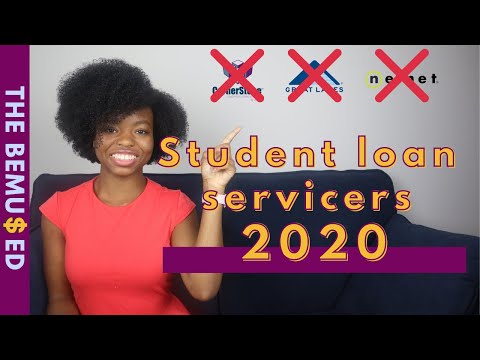
Who Is Servicing My Student Loans?
This video was created for those struggling with student loan debt. When I first started my business in 2013, I had over $400,000 in student loans. Now, 8 years later, I’m proud to say that number has been reduced to less than $50,000! In today’s market, education is often seen as the only path to success. However, not everyone who receives their undergraduate degree or graduate program is able to find employment right out of school due to a lack of skills, experience,experience, or knowledge in their field. Today, many people are choosing to continue their higher education and earn a master’smaster’s or doctorate degree because they wish to increase their chances ofof finding employment in their desired career field. Whether you have already graduated or are just beginning the journey towards earning your education credentials, here are some steps you can take to get control of your student loans and reduce the amount of money owed.
Resources for Student Loans: www.studentloans101.com/free-online-consultation/?b99999Resources for Student Loans: www.studentloans101.com/free-online-consultation/?b99999
Checkout my partner Juju Chang’s channel:
com/channel/UCOX…
@Bennedical is my Instagram handle.@Bennedical is my Instagram handle.
Or follow us on Twitter: @Bennedica.@Bennedica.
Enjoyed this video?Subscribe to my channel at https://www.youtube.com/therightamerican Subscribe to my channel at https://www.youtube.com/therightamerican
TheRightAmerican
Who Is Servicing My Student Loans?
Whowill service will service my student loans?
Student loan servicers are third-party companies that collect payments from borrowers and manage their accounts. Most students use them, but some don’t know they exist, and even if they do know about them, many aren’t aware of how they work.
How does my lender service my loans?
The most basic way lenders make money off student loans is by collecting interest on the principal over time. They also charge fees at different points throughout repayment cycles. If you have private loans, the servicer may receive payments directly from you or from an external collection agency. Either way, these companies take a cut of your payment.
Are there any good ways to avoid being charged high fees?
There are several things you can do to avoid getting hit with a bunch of extra costs when paying back student loans. First, check with your lender to find out if you qualify for special deals or discounts. You should never have to pay more than 10% of your discretionary income when repaying student loans. Second, shop around for a company that offers competitive rates. A good place to start looking is atat the National Consumer Law Center’s website. Third, consider consolidating your loans if you want to save money, but understand the risks involved. Finally, try to pay off a portion of your debt at once. Paying down debt makes sense no matter what type of financial situation you’re facing.
Why is it important to choose a reputable company?
Choosing a reputable company means finding someone who won’t push you into taking unnecessary services or charging you excessive fees. fees. You shouldn’t be forced to sign anything or agree to anything without understanding whatwhat you’re signing. Look for a company that meets certain industry standards and holds its employees accountable. Also, look for a company that tells you exactly where your money goes, including any potential profit it might make. And finally, ask lots of questions. Don’t just accept whatever information you’reyou’re given; confirm everything. Ask about customer service policies (like what happens if something goes wrong), how long the company has been operating, and whether there are complaints filed against the business.
What are the best student loans?
While private student loans are expensive, federal student loans offer lower rates and fewer restrictions. However, if you think you might default on your federal loans, then you should go ahead and get private ones instead. Private loans tend to be cheaper, but they also carry higher risk levels.
What if I need help paying my student loans?
If you have trouble making ends meet, you could probably benefit from financial assistance. There are two options for student loan forgiveness:public service loan forgiveness public service loan forgiveness and income-based repaymentincome-based repayment. Unfortunately, neither program is available to everyone. But you still have some options. Before applying for either program, talk with your lender first. If they say yes, you can apply for those programs, and your lender would have to report your payments to the government. That means you would likely be eligible for some kind of relief, such as reduced monthly payments or not having to repay your loan completely.
Where can I learn more?
Visit the NCLC website to read about the top mistakes people make while paying back student loans. Also visit the Federal Student Aid site to research the eligibility requirements for public service loan forgiveness. Find more tips for avoiding high fees here.
Who Is Servicing My Student Loans?
Student loans are a burden to both society and individuals. Most students take out student loans tocover the cover the costs associatedwith a with a college education. Students often take out private student loans and then rely on federal financial aid to pay back their loansloans. When a student graduates from school,school, they have taken on more debt than many professionals are able to handle. What happens after graduation? Many students find themselves stuck working minimum wage jobs just to make ends meet. Unfortunately, these minimum wage jobs do not provide enough money to pay off a $50k+ student loan. In 2015, student loan debt surpassed credit card debt for the first time.
It is time to rethink how we approach higher education and student loans. We need to figure out who is servicing our student loans and what kind of deal they are making with us. LetLet’s look at some statistics about student loans.
In 2016, total outstanding student loans were a whopping $973 billion.Approximately 63 percent of these are owed by borrowers under the age of 25. Approximately 63 percent of these are owed by borrowers under the age of 25.
According to a report released by the Consumer Financial Protection Bureau (CFPB), the average student loan borrower owes $37,172. The median balance for all borrowers was $12,500. However, according to the CFPB, student loan balances increased by $1,000 between 2012 and 2016.
The CFPB states that student loan debt should never exceed 36% of annual income. However. However, the average student loan debt now exceeds 43%.
A recent study done by the Institute for College Access & Success (TICAS) discovered that student loan debt affects roughly 75 million Americans,Americans, including 1/3 of millennials. TICAS also found that student loan debt can cause students to delay major purchases, stop saving for retirement, and put off starting a family. According to TICAS, the average student loan borrower in America is paying over $300 per month more than he/she would if the cost of college tuition stayed flat.
Now that we know some basic statistics, let’s examine who is servicing our student loan debt.
According to the Federal Reserve Bank of New York, the top 10 banks servicing student loans are Wells Fargo, JP Morgan Chase, Citigroup, Bank of America, UBS Financial Services, HSBC, RBC Dominion Securities, State Street Corporation, BNY Mellon, and PNC Bank. These banks service nearly half of all student loans.
What does this mean for those struggling with student loan debt? Typically, financial institutions purchase student loans from lenders and then resell them to investors. This means that banks are profiting off the backs of people in poverty. Banks are earning interest while consumers aresacrificing for sacrificing for their future. Why do banks profit from student loans? There are two reasons. First, student loans are considered a risk-free investmenta risk-free investment. Second, student loans are heavily subsidized by the government.
Let’s take a closer look at the first reason why banks profit from student loans. According to BankRate.com, banks earn around 6-8% of the amount lent on student loans. If we assume that each student loan has an initial principal balance of $25K, then banks will earn roughly $100K for each year that a student is enrolled.
This may seem like a decent return. However. However, it is actually quite low. A survey conducted by Harvard University revealed that the average rate of return for student loans is about 4.6 percent annually. In fact, if you invest your money in the stock market instead of banking, you could earn almost double the rate of return on student loans.
As for the second reason banks profit from the student loan industry, it comes down to the government. The federal government pays banks billions of dollars each year to hold and manage student loans. According to data compiled by Bloomberg, the federal government paid banks close to $30 billion in 2014. More importantly, the Department of Education spends over $75 billion each year on student loans. This is a lot of taxpayer money being funneled into the pockets of banks.
If we want to improve educational opportunities in the United States, we cannot continue lending money to banks. Instead, we should allow taxpayers to directly fund higher education through grants and scholarships.
Unfortunately, we have been down this road before. As I pointed out earlier, student loans have become so burdensome that many young adults are forced to work minimum wage jobs just to survive.
Who Is Servicing My Student Loans?
You
You may not realize this right now, but you are being charged interest on student loans while you’re still paying them off! And if you don’t pay attention to how much interest you’re accruing, you could find yourself saddled with hundreds of dollars more than what you originally borrowed over time. Here’s how it works:
If you take out a loan to attend school, the federal government will give you money upfront. But once you graduate and start repaying your debt, you’ll owe interest on top of everything else you owe. Your monthly payment includes principal plus interest (and sometimes even fees), which means that every month you spend paying down your balance makes the total amount you owe go higher. If you don’t make enough payments each month, your loan will hit its grace period, at which point you won’t have to make any additional payments until after that grace period ends. In most cases, you continue making payments throughout the entire length of your repayment term.
Here’s where it gets confusing. While the amount you owe might be fixed, the amount you actually pay back each month can fluctuate depending on how much you earn. That’s because the interest rate changes according to the kind of loan you’ve taken out;; whether it’s subsidized or unsubsidized;; and whetherit’s from it’s from a private lender or the U.S. Department of Education. So let’s say you’re working full-time and earning $20,000 a year. If you take out a subsidized Stafford Loan to pay for your education, the annual interest rate on your $21,000 balance will be 6%.If you take out a subsidized Stafford Loan to pay for your education, the annual interest rate on your $21,000 balance will be 6%.Under the same circumstances, the interest rate on an unsubsidized loan would be 9.5 percent.So, if you borrowed $22,500 on a private loan instead of the $21,000 you currently owe, your monthly payment would increase to $908 at 6% interest rather than $600. So, if you borrowed $22,500 on a private loan instead of the $21,000 you currently owe, your monthly payment would increase to $908 at 6% interest rather than $600.
KeepKeep in mind that these figures don’t account for state income taxes, which will eat away at any savings and make it harder to reach your goal of paying off your loan early. However, they do show you how long it takes to pay off different types of federally subsidized loans based on your current income.
The good news is that the interest rates on subsidized loans tend to stay low for the duration of your repayment term, often between 3 and 5 years.
So if you can afford to make only 10 percent of your monthly payment, you’re almost halfway done paying off your loan before it hits the three-year mark. If you’re able to make 20% of your payment, then you should be able to pay off half of your debt by graduation day. Of course, those calculations assume that you never receive any type of student loan forgiveness, which is possible if you work in certain public service jobs.
But regardless of your income level, here are some things you can do to lower your monthly payment:
Make sure you know exactly how much you owe before applying for a loan. Don’t assume that you just need to fill out the application, get approved, and then transfer your debt to your checking account. The exact dollar figure you owe will vary based on the loan type you choose. For example, if you apply for a Direct Subsidized Loan, the total cost of your loan will be calculated at the beginning of the process. If you apply for a Federal Family Education Loan, you’ll first need to complete the Free Application for Federal Student Aid (FAFSA). Then your financial aid package will be determined by the results of the FAFSA.
Shop around for private lenders. Many banks and credit unions offer lower financing terms than the US DOE. Just remember that lenders will calculate their own APR based on your personal circumstances and credit history. They’ll also charge you a small fee for the privilege of borrowing your funds.
Reduce your annual income.Reduce your annual income.If you’re receiving financial assistance from your family or friends, try to reduce the amount you ask them to contribute toward your loan.
Consider refinancing your existing loans. Private lenders may be willing to refinance your loans at a lower interest rate—or even for free—if you meet certain criteria.
Pay off high-interest debts first. Credit cards tend to carry the highest interest rates, followed by installment loans like Home Equity Lines of Credit (HELOC) or Secured Cards. These types of loans provide you with cash advances, which means you can use the funds to cover your monthly debt obligations without having to save up a hefty lump sum first.
And finally, always remember that there’s no sense in becoming overwhelmed by the numbers on your statement. Even if you haven’t paid anything on your loan since 2013, you still need to make regular payments so the loan doesn’t default. DoDon’t forget to factor in any loan forbearances that may have been offered; these allow you to extend the repayment timeline for a set number of months. This way, you don’t have to pay any additional interest. When calculating how long it would take to pay off your loan, the time frame for these forbearances should be subtracted from your original timetable.
►HEY, we’ve got more valuable information here: ►CLICK HERE LOANS FOR STUDENTS◄
►Cloud of related items ▼
bloque1x

Related Links ▼
- Studentaid.gov/understand-aid/types/loans
- Salliemae.com/student-loans/
- Discover.com/student-loans/
- Nerdwallet.com/best/loans/student-loans/private-student-loans
- Money.usnews.com/loans/personal-loans/personal-loans-for-students
- Credible.com/blog/student-loans/personal-loans-for-students/
- Govloans.gov/categories/education-loans/
- Forbes.com/advisor/student-loans/best-private-student-loans/
- Navyfederal.org/loans-cards/student-loans.html
- Wellsfargo.com/goals-going-to-college/loan-options/
- Whitehouse.gov/briefing-room/statements-releases/2022/08/24/fact-sheet-president-biden-announces-student-loan-relief-for-borrowers-who-need-it-most/
- Ed.gov/category/keyword/federal-student-loans
- Myfedloan.org/
- Navient.com/
- Usa.gov/student-loans
 English
 Afrikaans
 Albanian
 Amharic
 Arabic
 Armenian
 Azerbaijani
 Basque
 Belarusian
 Bengali
 Bosnian
 Bulgarian
 Catalan
 Cebuano
 Chichewa
 Chinese (Simplified)
 Chinese (Traditional)
 Corsican
 Croatian
 Czech
Czech Danish
 Dutch
Dutch Esperanto
 Estonian
 Filipino
 Finnish
 French
 Frisian
 Galician
 Georgian
 German
 Greek
Greek Gujarati
 Haitian Creole
 Hausa
Hausa Hawaiian
 Hebrew
 Hindi
Hindi Hmong
Hmong Hungarian
 Icelandic
 Igbo
Igbo Indonesian
 Irish
Irish Italian
 Japanese
 Javanese
 Kannada
 Kazakh
 Khmer
Khmer Korean
 Kurdish (Kurmanji)
 Kyrgyz
 Lao
Lao Latin
Latin Latvian
 Lithuanian
 Luxembourgish
 Macedonian
 Malagasy
 Malay
Malay Malayalam
 Maltese
 Maori
Maori Marathi
 Mongolian
 Myanmar (Burmese)
 Nepali
 Norwegian
 Pashto
 Persian
 Polish
 Portuguese
 Punjabi
 Romanian
 Russian
 Samoan
 Scottish Gaelic
 Serbian
 Sesotho
 Shona
Shona Sindhi
 Sinhala
 Slovak
 Slovenian
 Somali
 Spanish
 Sudanese
 Swahili
 Swedish
 Tajik
Tajik Tamil
Tamil Telugu
 Thai
Thai Turkish
 Ukrainian
 Urdu
Urdu Uzbek
Uzbek Vietnamese
 Welsh
Welsh Xhosa
Xhosa Yiddish
 Yoruba
 Zulu
Zulu